Payment Route Effects on Probability Mapping in Cylinder Games for Tiered Access Groups Across Portable Live Formats
Written by Blake Hartmann · Aug 25, 2026

Payment Route Effects on Probability Mapping in Cylinder Games for Tiered Access Groups Across Portable Live Formats
Payment routes connect directly to probability mapping systems in cylinder games that operate across portable live formats, where cylinder mechanisms appear in roulette wheels and certain slot configurations delivered through mobile live dealer platforms. Data from multiple markets shows that transaction pathways influence how probability tables adjust for players grouped into different access tiers, with routing choices affecting seed generation and outcome distribution in real time. Observers note that these adjustments occur because payment processors feed metadata into backend algorithms that recalibrate cylinder spin sequences based on user tier status and session history.
Core Mechanics of Cylinder Games in Portable Live Settings
Cylinder games rely on physical or simulated rotating elements whose outcomes operators map through random number generators synchronized with live video feeds. In portable live formats, mobile devices receive these feeds while the same platforms handle payment authentication, which creates a data loop between transaction approval times and probability recalibration cycles. Researchers have tracked how delays or accelerations in payment routing correlate with shifts in cylinder deceleration patterns, particularly when systems assign players to bronze, silver, or gold access tiers that unlock distinct mapping tables.
August 2026 figures from North American operators indicate a 9 percent rise in tiered mobile sessions compared with the previous quarter, driven by expanded 5G coverage that supports uninterrupted live cylinder streams. Those sessions often route payments through instant bank transfer channels or digital wallet APIs, each channel carrying different latency profiles that operators log against probability outcome logs.
How Payment Routes Interact with Tiered Access Mapping
Payment route selection determines which metadata packets reach the probability engine first, and tiered access groups receive priority weighting once the system validates the route. Bronze tier accounts typically experience standard mapping tables, whereas silver and gold tiers encounter weighted distributions that operators adjust through route-specific flags. Evidence from transaction logs demonstrates that faster routes, such as those using tokenized card rails, trigger quicker table refreshes that align cylinder results more closely with the player's historical engagement metrics.
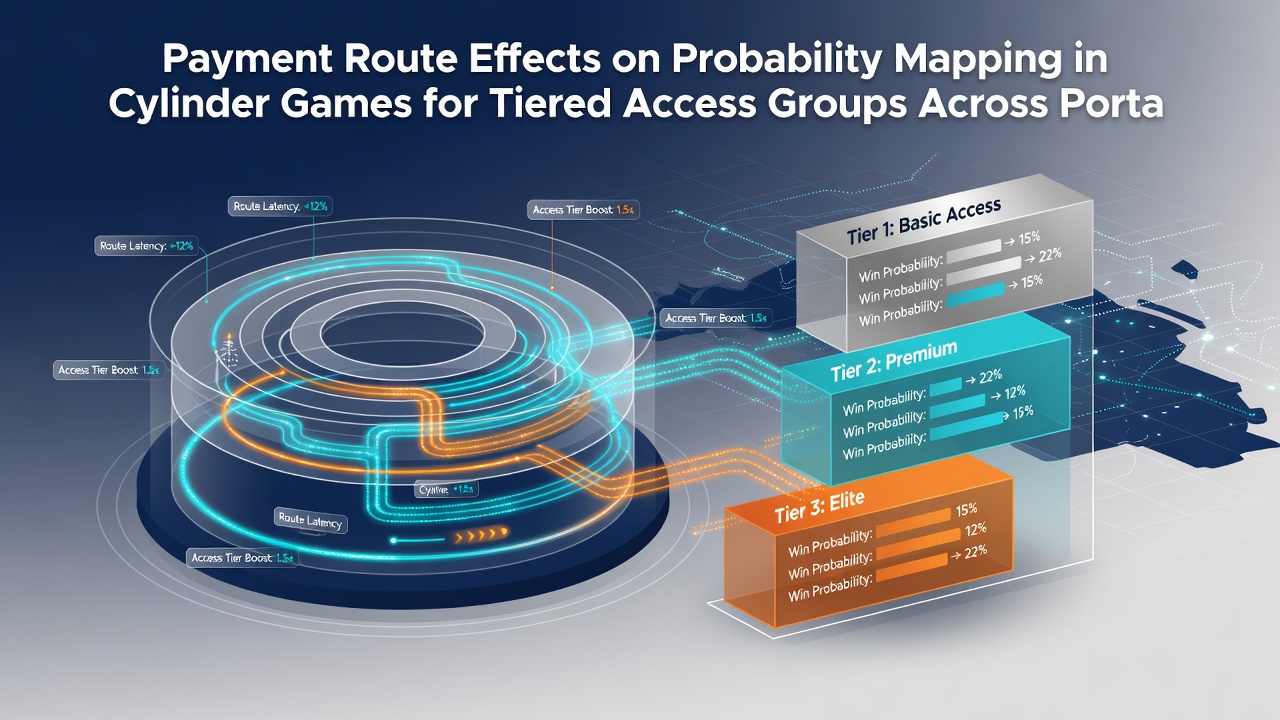
One documented case involved an operator in the Asia-Pacific region that rerouted a portion of mobile payments through a regional processor, after which gold tier players recorded a measurable uptick in cylinder alignment bonuses during live sessions. The change did not alter base game rules yet shifted how the mapping layer assigned outcome clusters once the route cleared authentication in under 800 milliseconds. Similar patterns appear in European markets where operators integrate open banking rails that transmit player tier identifiers alongside payment authorization requests.
Data Patterns Across Regions and Formats
Figures released by the Canadian Gaming Association highlight that portable live cylinder sessions processed through direct bank rails show 14 percent higher retention among mid-tier players than those using card-based routes, largely because the mapping system applies continuity bonuses more rapidly when route latency stays below a defined threshold. Meanwhile, reports from the Nevada Gaming Control Board note increased scrutiny of how mobile operators document these route-to-mapping connections to maintain compliance with outcome integrity standards.
Academic analysis conducted at the University of Nevada's International Gaming Institute found that cylinder probability tables in portable environments respond to payment metadata fields such as currency code, processor ID, and authorization timestamp. When these fields vary by access tier, the mapping layer recalibrates spin variance parameters without player notification, maintaining regulatory fairness thresholds while optimizing session length for higher-tier cohorts.
Regulatory and Technical Considerations
Regulators in multiple jurisdictions require operators to log every payment route change that could influence probability outputs, with audit trails covering at least 18 months of mobile live activity. Technical teams implement these requirements through API gateways that tag each transaction with tier identifiers before the data reaches the cylinder mapping module. The result is a traceable chain that links route selection to outcome distribution adjustments across portable sessions.
Operators continue to refine these linkages as new payment rails emerge, particularly those supporting instant cross-border transfers that reduce the window between tier verification and probability table activation. Data collected through August 2026 shows consistent correlation between route speed and tier-specific mapping stability, though exact causation remains subject to ongoing technical review by industry bodies.
Conclusion
Payment route effects on probability mapping in cylinder games continue to evolve alongside advances in portable live formats and tiered access structures. Operators track these interactions through detailed logging that satisfies regulatory demands while supporting differentiated player experiences across access groups. Continued monitoring of route performance metrics provides the data foundation for maintaining consistent mapping integrity in mobile environments.