Mapping How Server Response Timings Shape Participation Patterns in International Multiplayer Challenge Formats Across Regulated Digital Platforms
Written by Blake Schmid · Jun 23, 2026
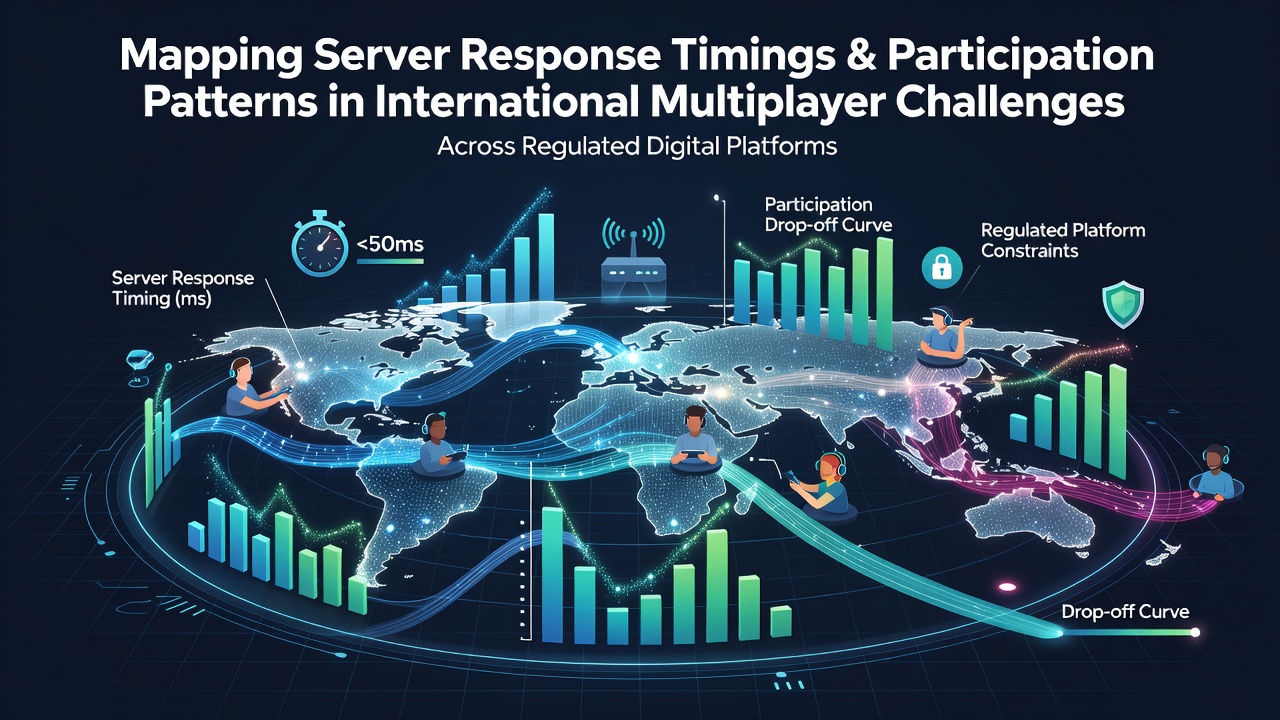
Mapping How Server Response Timings Shape Participation Patterns in International Multiplayer Challenge Formats Across Regulated Digital Platforms
Server response timings play a central role in determining how participants engage with international multiplayer challenge formats on regulated digital platforms, and data from multiple regions shows clear correlations between latency thresholds and user retention rates. Researchers tracking these systems have documented how even small delays in packet delivery can alter the flow of competitive sessions, particularly when events span multiple time zones and regulatory jurisdictions. In June 2026 platform operators reported measurable shifts in active user counts that aligned with adjustments to backend infrastructure in key markets.
Understanding Server Response Dynamics in Regulated Environments
Regulated digital platforms must balance technical performance requirements with compliance standards set by bodies such as the Australian Communications and Media Authority and the Malta Gaming Authority, which both monitor operational metrics including response intervals. These intervals, measured in milliseconds between client requests and server acknowledgments, influence everything from match synchronization to leaderboard updates during live challenges. Observers note that platforms operating under strict oversight often implement redundant routing protocols to keep average response times below established benchmarks, and this infrastructure directly supports consistent participation across borders.
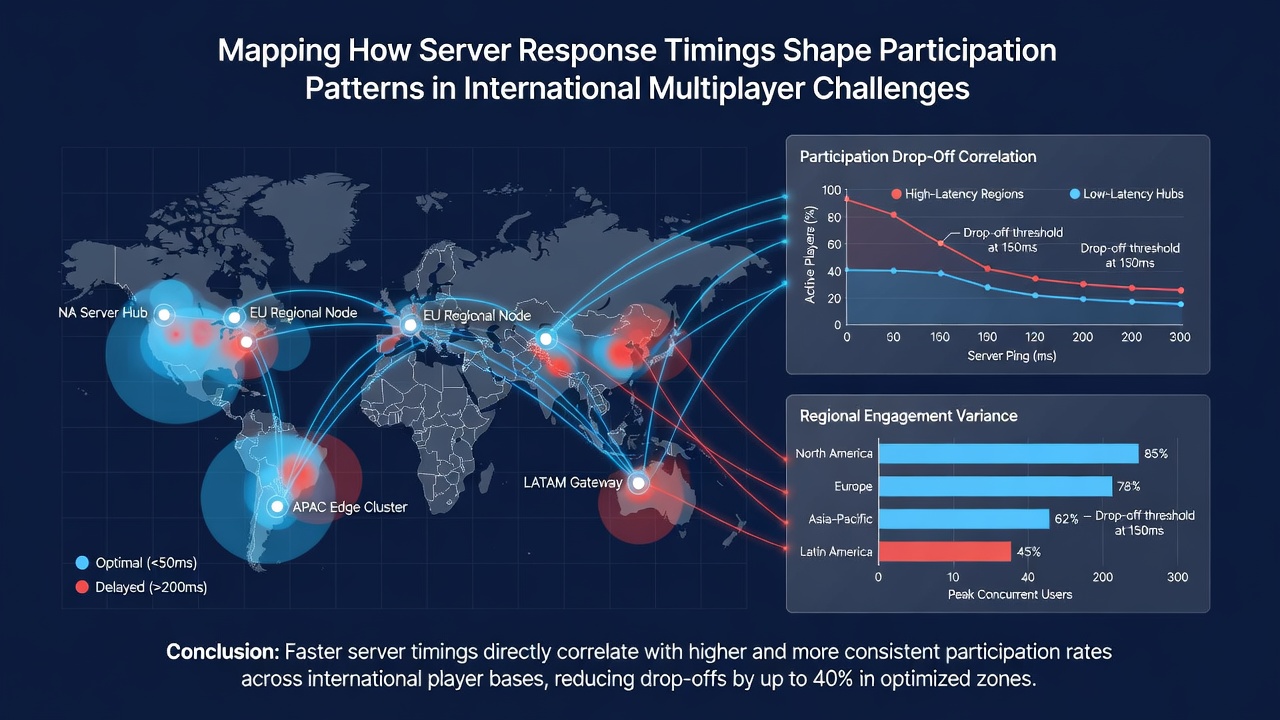
Studies conducted by academic groups at institutions including the University of Melbourne have examined how variations in these timings affect player decision-making during ranked events. When response delays exceed 80 milliseconds on average, participation curves show a noticeable flattening as users exit sessions earlier than expected. The same research indicates that platforms using edge computing nodes positioned near major population centers achieve more stable patterns, with retention holding steady even during peak international tournament windows.
Participation Patterns Across Global Challenge Formats
International multiplayer formats reveal distinct engagement signatures tied to geographic latency clusters. Participants located farther from primary server hubs tend to cluster in shorter-duration events, whereas those with lower-latency connections sustain longer session lengths and higher completion rates. Data compiled across European and Asian markets shows that formats allowing asynchronous entry points mitigate some of these timing effects, letting users join when their local network conditions permit optimal responsiveness.
Platform analytics from mid-2026 highlight how regulated operators adjust matchmaking algorithms to account for regional latency profiles. In one documented case, a system deployed across multiple jurisdictions reduced drop-off rates by redistributing players into latency-matched cohorts rather than relying solely on skill-based pairing. This approach produced steadier participation curves throughout multi-week challenge cycles.
Regulatory Frameworks and Technical Compliance
Regulatory frameworks in various jurisdictions require transparent reporting of performance metrics, including server response distributions during high-volume events. The Canadian Gaming Regulators Association, for instance, collects quarterly submissions detailing average and peak latency figures from licensed operators. These reports help authorities assess whether platforms maintain equitable access for participants regardless of location.
Compliance teams often collaborate with network engineers to fine-tune quality-of-service settings that prioritize game-critical traffic over other data streams. Such measures become especially relevant during cross-border tournaments where traffic routes pass through multiple regulatory zones. Evidence from these collaborations shows that proactive latency management correlates with more predictable participation volumes, reducing the volatility that sometimes appears when infrastructure upgrades lag behind user growth.
Case Examples from Operational Platforms
One operator managing challenge formats across North American and European servers implemented dynamic load balancing in early 2026, resulting in documented improvements to session continuity metrics. Participation data collected after the change indicated that users in secondary markets experienced response times closer to those in primary hubs, and overall event completion percentages rose accordingly. Another platform serving Asia-Pacific regions adopted predictive scaling based on historical latency patterns, which helped stabilize engagement during periods of regional network congestion.
These examples illustrate how mapping server response timings provides actionable insights for maintaining balanced participation across diverse user bases. Industry reports from organizations such as the Esports Integrity Commission further emphasize the value of continuous monitoring, noting that consistent performance data supports both regulatory compliance and format design decisions.
Conclusion
The relationship between server response timings and participation patterns continues to shape how international multiplayer challenge formats evolve on regulated digital platforms. Ongoing data collection across jurisdictions supplies the evidence needed to refine infrastructure strategies, while academic and industry analyses supply context for interpreting those patterns. As platforms adapt to new regulatory expectations and technological capabilities, the mapping of these timings remains a practical tool for understanding engagement dynamics at scale.